Bathroom Fitters in Newton Abbot: Who Does What on a Bathroom Project
September 8, 2026
Every autumn the kitchen trends for the year ahead start appearing, and 2027 has a clearer direction than most. After a decade of pale grey and cool white, the mood has turned warm. Green, brown, terracotta and berry tones are replacing the greys, timber is getting darker, and texture is doing work that colour used to do on its own.
Here is what we are seeing in the showroom, what the wider industry is predicting, and the more useful question at the end: which of these is actually worth putting into a kitchen you will still be living with in 2040.
Warm colours have finally replaced grey
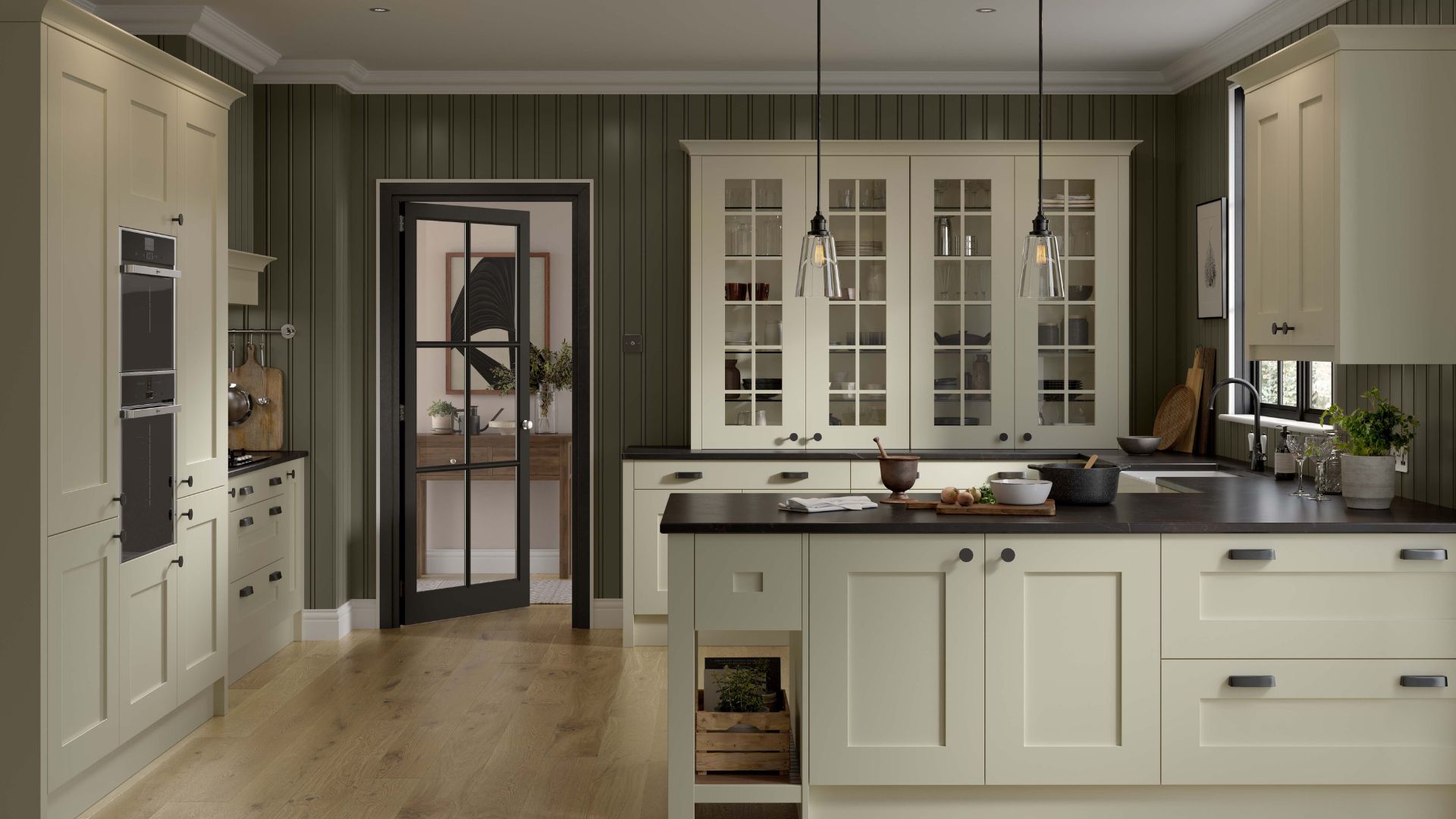
Green is the clearest story. Sage, olive, moss and deep forest have been the most requested colours in our Newton Abbot showroom for a while now, and the national picture agrees. Pinterest search data reported this autumn put searches for green kitchen ideas up by around 40 per cent.
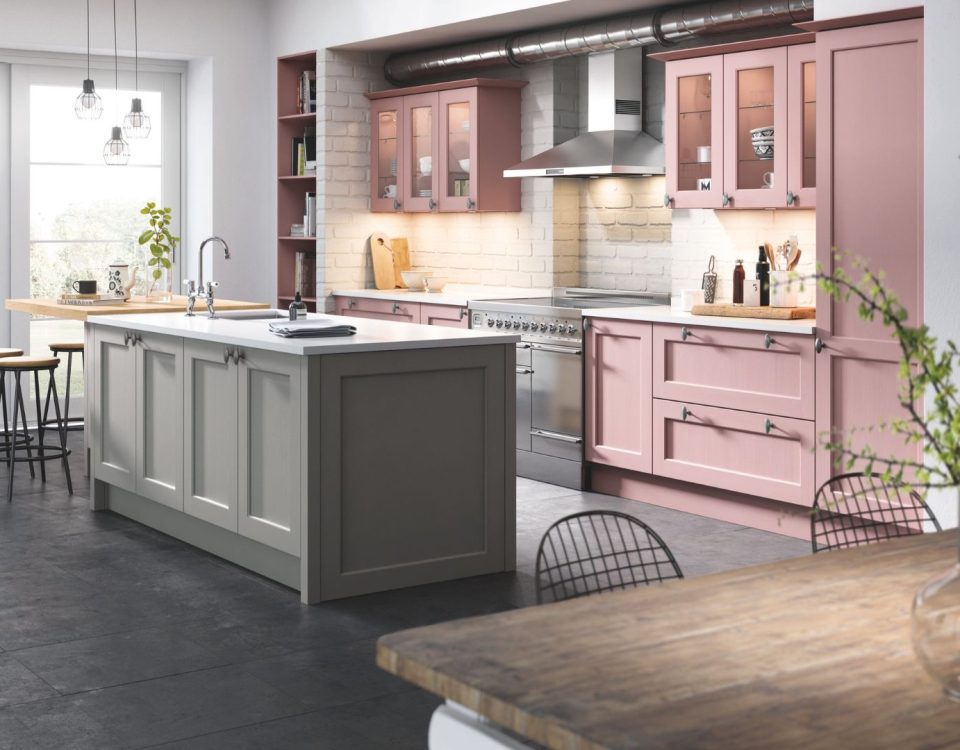
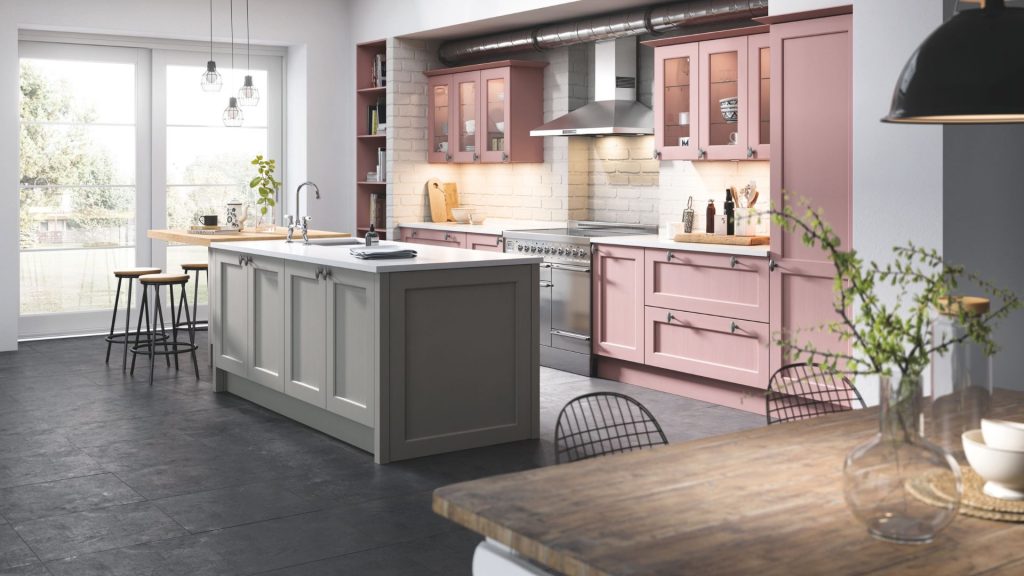
What is new for 2027 is how far the warmth is spreading beyond green. Brown is being used properly again, layered in several shades rather than as a single wood tone. Terracotta, burgundy and berry shades are appearing on islands and tall runs. Even the neutrals have shifted, from cool greys towards clay, putty and heritage off-whites.
It suits Devon houses, which is partly why we like it. Warm tones sit far more comfortably in a stone cottage or a Victorian terrace than the cool greys that dominated the last ten years, and they hold up better under the flat light we get from October onwards.
Walnut is replacing pale oak
Light oak has been the default timber for years. For 2027 the industry is pointing firmly at darker woods, walnut in particular, along with stained and smoked oak finishes that keep the grain visible but drop the tone considerably.
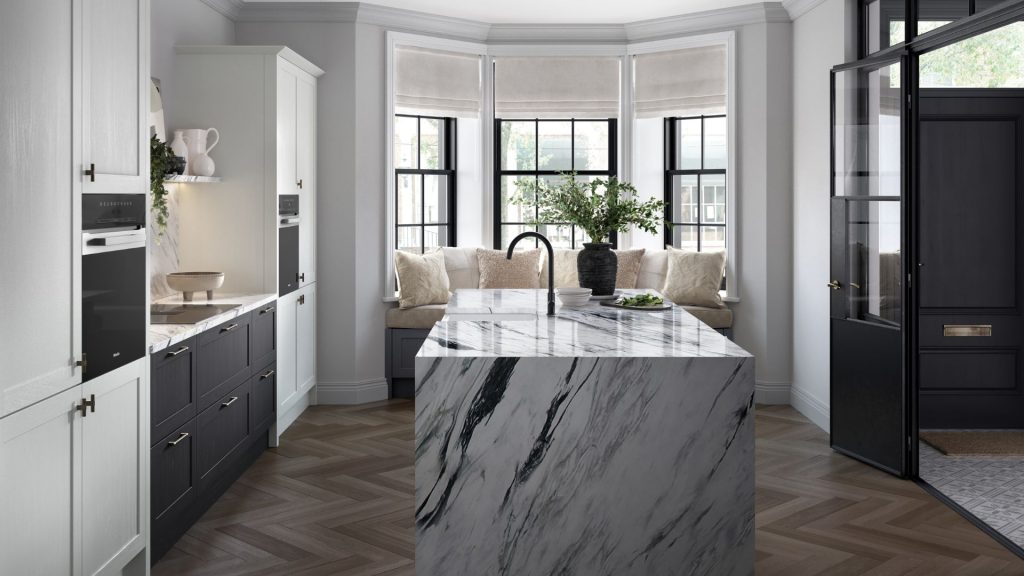
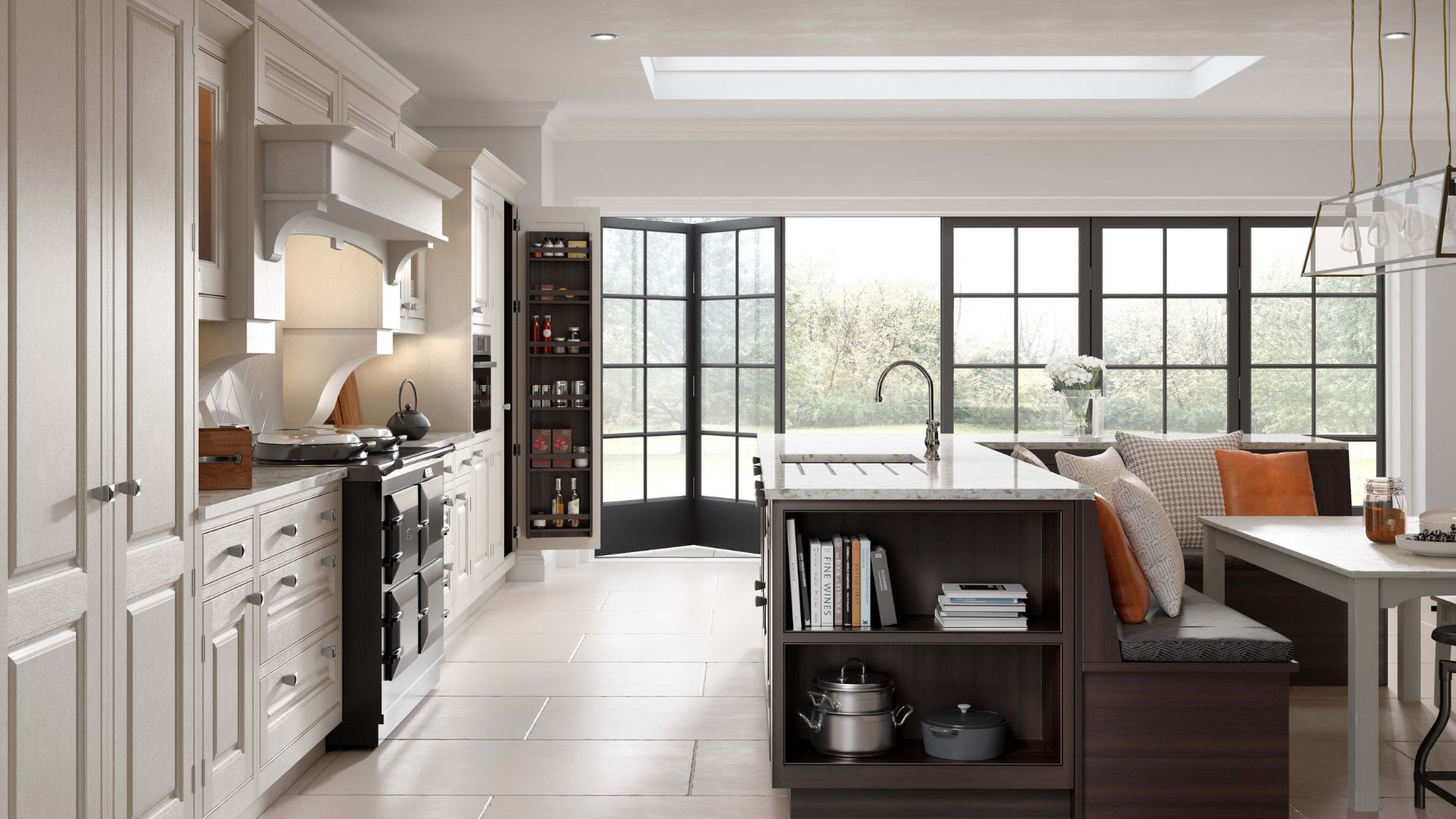
The most common way we are specifying it is not a full timber kitchen, which can feel heavy, but as part of a two-tone scheme. A walnut island or a bank of tall units against painted cabinetry gives you the warmth and the grain without the room closing in. Mixed wood tones are also acceptable again, so a warm oak floor underneath walnut furniture no longer counts as a mistake.
Texture is the detail people are asking for
If one thing separates a 2027 kitchen from a 2022 one at a glance, it is surface interest. Fluted and reeded cabinet fronts, tongue and groove panelling, and reeded glass in wall units are all in demand, and they do something flat slab doors cannot. They catch light, they add shadow, and they give a plain colour somewhere to go.
The same thinking is showing up in tiles and stone. Small format tiles, tumbled limestone and surfaces with visible movement and a bit of irregularity are replacing the large, uniform, perfectly flat finishes. Warm metals are part of it too, with brass and bronze handles and taps continuing to displace chrome.
A word of caution from the showroom floor. Texture is easy to overdo. Fluted doors, patterned tiles, a veined worktop and a textured splashback in one room will fight each other. Pick one surface to carry the interest and keep the others calm.
Broken plan is replacing fully open plan
The biggest layout shift is the quiet retreat from knocking everything into one room. After years of fully open plan living, people have noticed the downsides, which are noise, cooking smells, and nowhere to go when someone wants the television on.
Broken plan keeps the connection but puts some definition back. That might be a partition or stud wall, glazed internal doors, a change in floor level, a run of cabinetry acting as a divider, or simply a change of flooring between zones. You keep the light and the sociability, and you get somewhere to shut the door.
This is one we have been designing for several years in South Hams and Teignbridge properties, often because the building insists on it. Period houses rarely want to become one big room, and working with the structure usually produces a better result than fighting it.
The pantry has become the most requested item in the kitchen
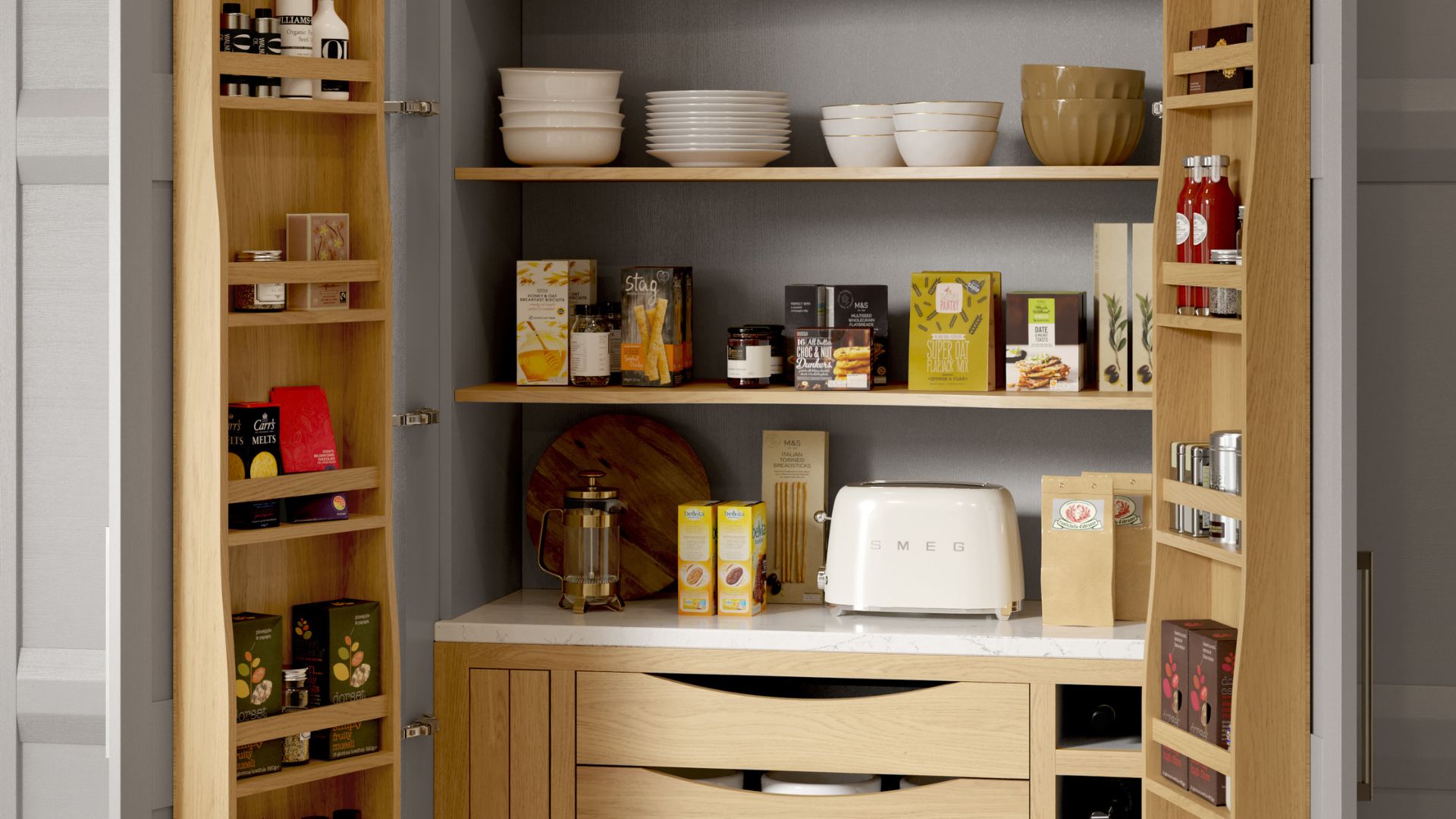
Storage has stopped being an afterthought. Prep pantries, breakfast cupboards, boot rooms and proper utility spaces are being designed in from the start rather than squeezed in at the end, and for 2027 they are being treated as rooms worth designing rather than cupboards to hide things in.
The reasoning is practical. If the kettle, toaster and coffee machine live behind a door, the worktop stays clear, and a clear worktop is what makes a kitchen feel calm. It is the single change that most often transforms how a kitchen works day to day, and it is far cheaper than an extension.
Islands are getting the same treatment, with easy-access drawers, open shelving and storage designed around how the household actually uses the room rather than around a showroom photograph.
Which of these will still look right in ten years?
This is the part most trend articles skip. Not all of these are equal, and they do not all deserve the same level of commitment.
The ones with staying power are the structural decisions. Warm colours over cool, because that is a cycle correction rather than a fashion, and warm tones have come back round every twenty years or so for a reason. Broken plan, because it solves a genuine problem rather than following a look. Proper storage, because nobody has ever regretted a pantry.
The ones to be careful with are the decorative details, and that includes some of the most appealing ones on this list. Fluted fronts, Zellige tiles and a strong berry island are all lovely now, and all more likely to feel of their moment in fifteen years. That does not mean avoid them. It means put them where they are affordable to change.
Our usual advice has not changed. Spend the money on cabinetry, layout, worktops and flooring in colours and materials you have always been drawn to. Put the trend-led choices into splashbacks, handles, wall colour, lighting and the things you can swap in a weekend. Then your kitchen can move with the times without you needing a new one.
Frequently asked questions
What is the main kitchen colour trend for 2027?
Warm tones replacing cool greys. Green leads it, particularly sage, olive and deep forest, alongside brown, terracotta and berry shades. Neutrals are shifting from grey towards clay, putty and warm off-whites.
Are grey kitchens out of date in 2027?
Not unusable, but they are no longer the default. A grey kitchen can be warmed up considerably with timber, brass hardware and warmer wall colours rather than replaced, which is a far cheaper way to bring it up to date.
Is it worth following kitchen trends at all?
Selectively. Trends are useful for the parts you can change easily, such as splashbacks, handles, lighting and wall colour. For cabinetry, layout and worktops, which you will live with for fifteen years or more, choose what suits your home and how you use it.
To talk through any of these for your own home, book a complimentary design appointment with Inline Design Studio at our Newton Abbot showroom.